
The Christ Candle

The Longing for Significance
There is within each person a need, a yearning for significance, a longing to believe that my life matters, that I have worth and value as a human being. Thousands of self-help books speak to this longing. People have sought to fill this void with their work, their accomplishments, their relationships. Social media is rife with people seeking to raise their status and significance by their postings. Others seek to accumulate wealth, prestige, or power to satisfy that longing. And yet… the hunger remains. At Christmas, we are reminded that this longing did not originate in us alone; it was placed there by God Himself. In The Search for Significance: Seeing Your True Worth Through God’s Eyes, Robert S. McGee wrote, “We must understand that this hunger for self-worth is God-given and can only be satisfied by Him. Our value is not dependent on our ability to earn the fickle acceptance of people, but rather on the love and acceptance of God. He created us. He alone knows how to fulfill all of our needs.” The message of Christmas is the heart of God’s declaration of our worth and value to Him.

Endowed With Significance
From the very beginning, God endowed mankind with dignity, worth, and value. In Genesis 1:26-28, we read that He bestowed on us what scholars call “The Imago Dei” – the very image of Himself. It was inherent in our creation and seen in a number of ways. Humans were endowed with intellect, emotion, and volition (the faculty or power of using one’s will). Further, we were given the desire to be in a meaningful relationship with God and others. We were given the power of moral reasoning, the ability to know right from wrong. Then God looked at all He had created, including mankind, and declared it to be “very good”. Were that the end of the story, there would be no need for a search for worth, value and significance. But the story did not end there.
Unfortunately for us, our forebearers made some disastrous decisions that led to catastrophic consequences. As a result, according to Genesis 3:1-13 that Imago Dei with which we were created, while not destroyed, became badly marred. Where moral purity had been our norm, sin, guilt, and shame became the new way of life. Where fellowship with the Creator had been easy and natural, hiding became the pattern for life. Where relationship with God and other humans had been marked by openness and trust, it now became fractured by defensiveness, deceit, and fear. To be blunt, had I been God, I may have wiped the slate clean, hit the delete button, done a reboot, a reformat or just plain started over.
Restoration Promised
Genesis 2:17 tells us death was the only known penalty for disobeying God, His will, His word. Again, if I were God… the evidence is clear, the guilt is clear, the sentence is clear. But God… “because of His great love for us, God, who is rich in mercy” (Ephesians 2:4)… had another plan in mind. Instead of deleting us, God purposed and promised to restore us; to return us fully to Himself, to restore our significance, worth, and value; and, most importantly, our relationship with Him. Beginning with Adam and Eve, God gave assurances that one day he would undo the destruction they had caused by their disobedience.
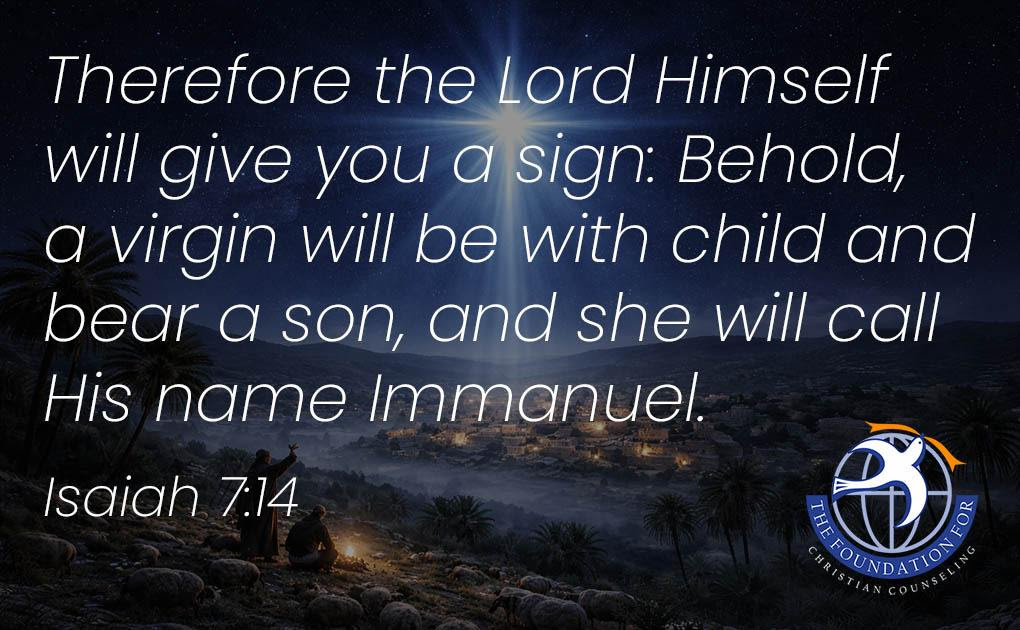
Over countless generations and centuries the plan and the promise of God was in motion; often unseen, unrecognized, yet none the less working toward its final goal. From that first promise in Genesis 3:15, more promises followed; over 300 messianic prophecies, in fact, to the generations following Adam & Eve. The hope and promise of God would be renewed; reiterated, and occasionally expanded upon over the ensuing millennia. It wasn’t always understood, but it was there, quietly unfolding, patiently advancing toward fulfillment. Who could understand Isaiah 7:14 “The virgin will give birth to a son and you will call him Immanuel.” Certainly, intellectually we understand the meaning of the words, but who could grasp what they meant. Who could grasp the meaning of Isaiah 9:6-7: “For to us a child is born, to us a son is given, and the government will be on his shoulders. And he will be called Wonderful Counselor, Mighty God, Everlasting Father, Prince of Peace. Of the greatness of his government and peace there will be no end. He will reign on David’s throne and over his kingdom, establishing and upholding it with justice and righteousness from that time on and forever. The zeal of the LORD Almighty will accomplish this.” In Galatians 4:4, Paul tells us all of these promises came to fruition: “But when the set time had fully come, God sent his Son, born of a woman, born under the law, to redeem those under the law, that we might receive adoption to sonship.”
Significance Restored and Magnified
As the significance of Christmas is unfolded, we discover two things. First, with the lighting of the Christ Candle, we celebrate the astonishing truth that God Himself has drawn near. Matthew 1:23 tells us “The virgin will be with child and will give birth to a son, and they will call him Immanuel”— which means, “God with us.” The idea of the presence of God among us produces a host of conflicting thoughts and emotions in each of us. They range from a sense of shame, unworthiness and outright fear, to those of peace, joy and comfort. In this we are not unique; throughout the ages those extremes are seen again and again, often in the same individual. Consider this, how valued, how significant are we to God that He would make the following declarations? John 1:1 “In the beginning was the Word, and the Word was with God, and the Word was God.” John 1:14 “The Word became flesh and made his dwelling among us. We have seen his glory, the glory of the One and Only, who came from the Father, full of grace and truth.” The Eternal God, in the person of His Son Jesus Christ, came to dwell among us in order to restore our significance, worth, value and relationship with God.
Second, it becomes clear that God’s purpose and promise of restoration of humans to Himself was not without horrendous cost to himself. Who could have understood the reality that God himself would come down in human flesh; would literally become one of us in order to pay the price for our sin? This was not sentimentality, it was sacrifice. Who could have understood the promise in Isaiah 53 that God would take upon himself the punishment that was and is deservedly ours? By His act of utter selflessness, He invests in us an even greater worth, significance, value and purpose. Our significance is not earned, it is received. This significance is not dependent on me, my abilities or obedience; it’s not dependent on what others see in me or think of me or tell me. It’s not based on my net worth or my ability to have influence, power and control; all of these things are transient; they are a chasing after the wind. It depends on God’s sovereign choice. Romans 5:6-8 tells us “You see, at just the right time, when we were still powerless, Christ died for the ungodly. Very rarely will anyone die for a righteous person, though for a good person someone might possibly dare to die. But God demonstrates his own love for us in this: While we were still sinners, Christ died for us.”
Our significance and value are rooted in Him, and Him alone. The eternal Creator made us in His image, and loves us with an everlasting love. So great is His love that He refused to allow our self-inflicted rebellion and sin to cost us that measure of significance with which He endowed us. Immanuel is God with us, God for us, God’s astounding love poured out on us. What greater statement of our worth and value do we need?

Significance Embraced
As image bearers of God, once we embrace the significance with which God has endowed us, how can we help others come to recognize their significance, worth, and value? It starts by treating everyone we encounter as people of worth and value in God’s eyes. We do that when we speak words that uplift, encourage, and point people toward the One who endowed them with His image and who loves them with an everlasting love.
We do it through our actions, giving of our time and resources to help the least, the last, and the lost come to understand their true worth and value in God’s eyes. This is the heart of the mission of The Foundation for Christian Counseling: to restore dignity, hope, and healing to those who have been made to feel unseen or unworthy. Make it your mission and purpose to be a voice and a presence that seeks to restore people to their significance, worth, and value in God’s eyes. Consider giving a gift to The Foundation for Christian Counseling, whose mission is to Transform Communities One Family (even one person) at a time. As we move through this season when we celebrate the birth of Jesus Christ, my hope and prayer is that we recognize the foundational truth of Advent: in the birth of Jesus Christ, God has come near, His presence has been revealed, and His love is offered to whosoever will welcome and receive Him.
About the Author